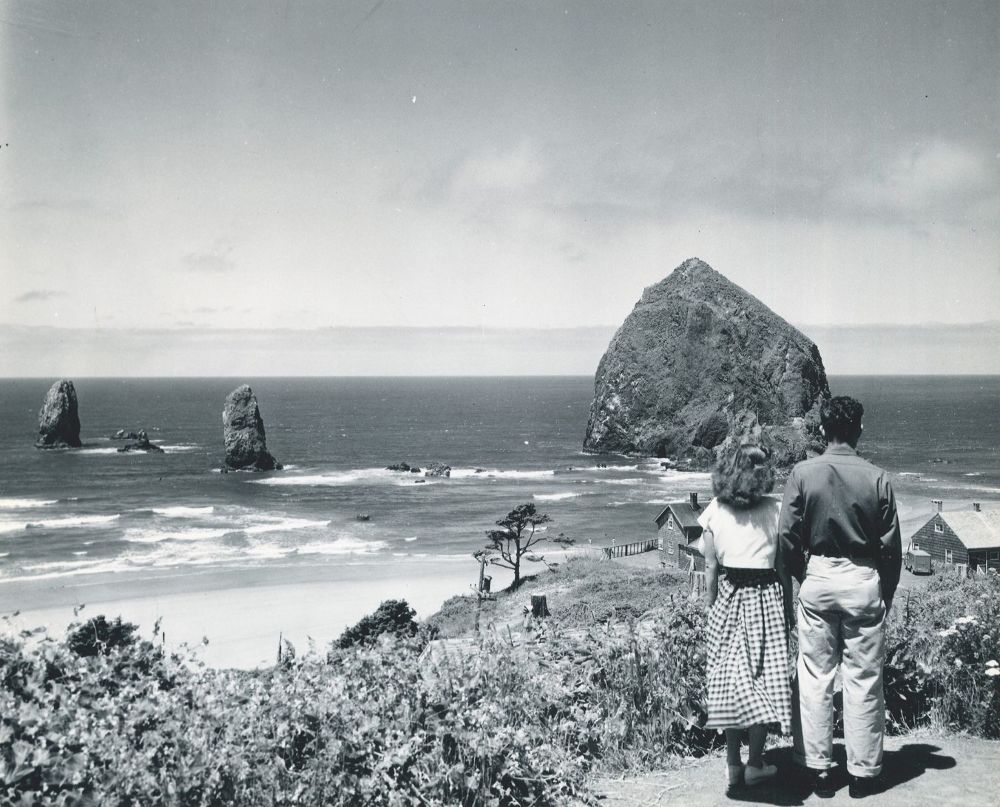
OREGON’S NORTH COAST faces problems common to many destinations. Demands on resources boosts momentum for heavy urban growth. Without careful management, this accelerates overcrowding and makes matters worse.
Growth puts pressure on community budgets and quality of life. It expands the need for spending on maintenance and repairs of infrastructure, plus it adds expense to public services. Over time these costs often exceed the revenues produced by growth, even with system development charges. Affordability erodes as a result, along with many natural amenities that are valued by residents and return visitors.
We’ve watched this process eat away at beloved places around our state, country and world. It extends a history of extraction described as “fat grabbing” by Native Americans. Oregon governor Tom McCall famously encouraged folks to counter this habit with collective stewardship.
“The interests of Oregon for today and in the future must be protected from the grasping wastrels of the land,” the Republican governor said in a pivotal speech delivered on January 8, 1973. “We must respect another truism – that unlimited and unregulated growth leads inexorably to a lowered quality of life.”
McCall was a genuine maverick who devoted his life to preventing sprawl and conserving rural resources. Few public figures have carried his kind of leadership forward. Many claim to champion grassroots community values. Yet many also participate in top-down decisions aimed at fueling urban growth while ignoring the downsides.
This isn’t part of a secret plot. It’s just a reality that political careers are advanced by cutting ribbons for capital projects, more so than shoring up basic services or fixing potholes. Urban expansion sells real estate, which drives short-term economic gains and success by mainstream standards.
Thus the focus on existing needs gives way to flashy new construction. And enough money usually changes hands to perpetuate the myth that “growth” is a perfect synonym for “progress.”
THE GAME COMES with a twist in places with high levels of tourism. In destinations like Cannon Beach, officials can fluff up budgets with taxes from overnight visitors. Transient lodging taxes (TLT) are a popular source of revenue, in part because the people who are required to pay don’t vote in local elections. This adds to the public purse without burdening local property-owners – some who pay taxes on second or third homes, some who have one residence and a very fixed income.
Unlike locals, visitors who pay transient lodging taxes lack a collective voice in deliberations involving their tax-dollars. Travelers are removed from decisions on how their money is extracted and spent by officials at city halls and county courthouses. At the state level, policies regarding TLT are negotiated by lobbying groups representing local governments and lodging businesses.
Nonetheless, travelers do care deeply about the host communities where they/we pay taxes. Many are acutely aware of changes when returning to beloved destinations. We want our money to be spent wisely.
VISITORS AND RESIDENTS are all stakeholders in TLT regulation, so it’s good these rules are getting broader attention throughout Oregon.
Here’s where TLT policy stands, according to state law as currently enforced. If a local government raises lodging taxes beyond 2003 levels, our government requires 70% of those “new” revenues to be used for tourism promotion and development.
Viewed through a cynical lens, that means most of this “new” money must be spent to market travel destinations, even if the funds could be used to provide better care for these places. Over time, ads showcasing the beauty of communities like Cannon Beach are blamed as the chief cause of overtourism. Critics claim such promotion attracts so many visitors that it starts to feel like false advertising, especially during peak tourist season.
The word “new” is very important in the last two paragraphs, though its significance is overlooked in media reports and public discourse about TLT. When we factor in lodging tax rates set in place before 2003, the lion’s share of revenues taken from overnight visitors have no spending restrictions. In Cannon Beach, we had a 6% lodging tax before 2003. City government has full unrestricted access to those dollars. The 70/30 split only applies to the 3.5% rate increase of TLT after 2003. That means officials can now spend over 70% of the total revenues from lodging taxes however they want.
Nonetheless, local governments have pushed the idea that communities are unfairly limited by fiscal regulation unless the state loosens restrictions on TLT spending. Citizens are told we can trust government to manage those revenues with less restrictions, that officials will keep their spending in line with priority needs if we grant them more flexibility.
State lawmakers came close to offering up that blanket trust during their regular 2025 legislative session. Oregon’s house of representatives passed a bill that would have diverted more TLT funds from promotion of tourism into the general funds of city and county governments.
Many boosters cheered this as a sign of progress. After the bill stalled in the senate, proponents vowed to revive the fight to remove restrictions on TLT spending in 2026. Lobbying groups representing local governments and lodging businesses have been haggling during the interim, negotiating toward that legislative lift.
MUCH AS I’D LIKE to join this parade, caution steers me elsewhere. I’m concerned the campaign to loosen restrictions on money taken from overnight travelers will lead to more of the same unmanaged growth and overtourism. Surely we can proceed with greater assurance of real reform, especially in Oregon, where our legacy of land stewardship offers the chance to connect fiscal discipline with better care for destination communities.
Instead of loosening rules, lawmakers should carefully target TLT funds toward budget needs that serve both residents and overnight visitors. Don’t do away with restrictions. Instead, update and refine them. In Cannon Beach and other rural beauty spots, this means making sure travel money is managed in prudent ways that sustain quality of life and protect natural resources.
For more mature tourist economies, this probably won’t involve much advertising. Communities like Cannon Beach are transitioning from promotion to education and management. This shift requires us to work together and grow smarter, not larger, finding ways that re-adapt to our native environment.
In my bookshop I love conversing with return visitors who appreciate our community, including the ones who stay overnight and pay transient lodging taxes. Sleepovers offer the chance to expand friendship with a place and her residents. Unfortunately, these overnights have become unaffordable for many long-term visitors who now settle for day-trips.
People who can afford to stay overnight now account for about a third of our total tourist population. Apparently the League of Oregon Cities wants money collected from this minority to cover as much urban spending as possible, including jail expansions and the rising cost of services for day-trippers. From what I can tell, the Oregon Restaurant and Lodging Association hopes to continue growing tourism with subsidies from that same source.
What do folks who pay these taxes want? I can make an educated guess, based on conversations with visitors at my bookshop and my own travel experiences. Many taxpayers who’ve made lifelong pilgrimages to this coast miss the days when Cannon Beach and her neighbors felt more like intact communities.
Un-affordability of residential lodging is a key part of this community erosion. Year-round stress accompanies the demands of urbanizing traffic on locals who provide hospitality. Anxiety over rent for these workers is a major contributor to the weakening of economic security and civic spirit.
For ideas on how to solve this problem, local governments often turn to the same private interests that feed the hunger for growth – namely, real estate players who’re in the business of financing, building and selling houses. Such discussions have led to reduced restrictions on urban growth, granting developers leverage over advocates of careful land-use planning.
No doubt this tactic has achieved some incremental gains. Yet the resale of subsidized units often slides back into a market groove that rises with prices of surrounding properties. There’s an incentive for government not to resist this trend, since tax revenues climb along with cost.
I believe the goal of sustainable housing could be well served if local governments also teamed up with lodging companies, not rely so heavily on real estate marketeers. Partnering with lodgers could help strengthen workforce security and safeguard local quality of life. These twin objectives are mutually beneficial for everyone who resides in or visits scenic communities.
One practical tool for advancing this teamwork is a Tourism Investment District. These districts are not-for-profit entities funded by self-assessed fees paid by businesses. Here’s a link to information about how they can be used to secure affordable workforce housing.
Local governments could incentivize this effort by lowering lodging taxes by the same portion as self-assessed fees are collected by from lodgers. The resulting revenues could be used to fund districts that serve as affordable housing trusts. Indeed, I would trust such districts to hold to their chartered missions, more so than growth-hungry governments.
OREGON BENEFITS when travel money supports the mutual needs of overnight visitors and hardworking local hosts. Hospitality and life quality are inter-dependent. Both require responsible spending on care for the places we love.
Unfortunately, battles over transient lodging taxes have deepened civic divisions in communities like Cannon Beach. The ecosystem of friendship has been damaged, even among individuals who have worked for many years on common goals.
Two key groups have suffered from these battles. I’ll call them “inn-keepers” and “conservationists.” People with feet planted in both groups have been targeted with animosity, including long-standing residents who’ve demonstrated their fidelity to community service.
Some of us try to counter this dynamic with gatherings that celebrate cultural exchange and civility. Such fellowship appeals to residents and visitors alike. In my bookshop I’ve met plenty of like-hearted folks who inhabit both worlds.
I’ve also learned a lot from trips to the other side of the counter, when my wife Jennifer and I travel to other scenic rural areas . We like to hole up in small towns, get to know the locals. Our most memorable vacations haven’t been in destinations bent on high-end growth, but in communities where folks love building friendships even more than selling stuff.
We’re always grateful for affordable lodgings run by conscientious inn-keepers. We also take note of additional charges assessed by local officials. One always hopes that travel money will be handled carefully, so hearts can expand with many happy returns.

Couldn’t agree with you more. We’re dealing with that all right now trying to get the air museum in tillamook repaired. Second largest tourist draw for the county, yet no funds for maintenance or repair.