“I mean patriotism – love for your country and your neighbors. There’s a difference, Mr. Bode, between the state, or any other organization, and the country.”
– from the short story Fidelity by Wendell Berry
“I solemnly swear that I am up to no good.”
– from the novel Harry Potter and the Prisoner of Azkaban by J.K. Rowling
WHAT FITS AMERICA’S BILL for the ideal engineer or artist, wizard or scientist, teacher or seeker? What makes someone a good activist or warrior, peace-maker or preacher? On sunny days do these archetypes line up on the same civic spectrum, all connect to a root motivation?
If this root exists we might call it “patriotism,” and I pray that it does. Thinking about the possibility requires us to shine some light on what “patriot” means.
When we the people of America look out across the land, this miraculous country, do stirrings of deep gratitude call us to care for each other and creation? When we walk down the street do our hearts beat with belonging, pumping out compassionate pride for the people and place we love? Is this calling, this love, what fills the patriot’s trove?
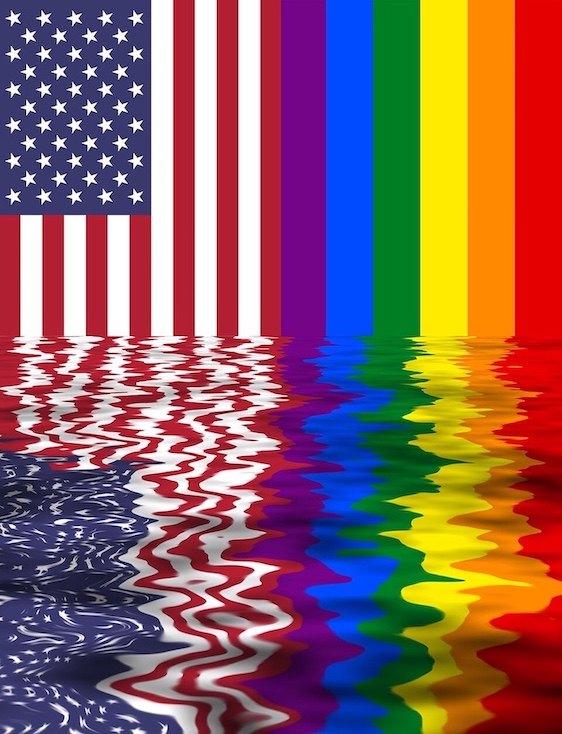
Or do we feel a different stirring? Are conquest and domination the true treasures we crave at each end of the national rainbow?
June is a fine month to launch such questions as we jump into summer and swim in the surge of esprit de corps. This thirty day dance of sun and moon is dedicated to Juno. She’s the chief councillor and protector of the state, wife and sister of Rome’s divine patriarch Jupiter.
Today we largely ignore the mythic headings that adorn our calendar and routines. Yet those gods and their tales were once as ingrained in the minds of citizens as other stories now told. Such projections of authority bind our past and present. They influence the ways we think and interact with the world.
Juno reminds me of many highly skilled women I’ve met, awesome multi-taskers who mostly serve at the pleasure of men in the region where I was born. We were taught that Jesus is the guide for these human relationships, meaning we’re supposed to love one another and care for the least among us. Yet we were also raised to revere a volatile patriarch who conned his way into wealth after marrying his sister – indeed used her as a tool in the acquisition of riches – then nearly murdered their son because he was sure God ordered him to do so.
Many religious authorities have framed Abraham as the binding personality of man’s primal covenant with God, thus anchoring society as a whole. Leaders have long pursued a fusion of church and state that replaces conscience with total submission to monarchs who embody that binding power. They conflate patriotism with subservience to a confusing and often two-faced model of manhood.
My words here explore another understanding of patriotism, one that affirms my agency as an individual who does not kowtow to patriarchy. I’m grateful to anyone who’s willing to walk with me, step by step, beginning with thoughts that arose on the day I started writing this declaration.
JUNE 14th IS A WARM-UP to salute our national character, a celebration that climaxes on the Fourth of July, named after Julius Caesar, then coasts on through our summer recreations. This year’s festivities are synchronized with the 250th anniversary of America’s independence from empire.
On this date in 1777 the Second Continental Congress representing thirteen states formally adopted a flag. It symbolized a countercultural challenge to monarchs and their minions. With this symbol colonial leaders re-affirmed that we the people, created as equals, possess inalienable rights to life, liberty, and the pursuit of happiness.
The affirmation was revolutionary for those present on that first Flag Day, even though it was a familiar worldview for many Indigenous heirs who have abided in this land for thousands of years. Our corporate founders did not include these forebearers in their affirmation of freedom. Nor did they consider many other stakeholders to be their equals.
That doesn’t mean what they wrote and said and did wasn’t important. Thomas Jefferson was never the final authority on America, any more than J.K. Rowling can speak for every visitor of Hogwarts. Yet we can acknowledge the value of their words, even knowing when they failed to live up to them.
America’s early writings have advanced our understanding of what it means to thrive together as one people. Had those words not inspired Americans, our treatment of one another would be less humane, less even-handed, more supremacist. It’s even possible that slavery would still exist had those writings never seeded the hearts of patriots.
Some may think our nation would prosper if there were no resistance to an American version of authoritarian power. We could wrap Flag Day around the adulation of an executive, celebrate dominion with grand redesigns of our capitol, lavish new monoliths, big private and public buildings named after our patriarch with newly minted currency featuring his likeness.
The world would be simpler, some apparently believe, if we entrusted all discernment to one will. We could accept without limit the sweeping use of pardons to reward loyal minions while bringing the hammer down on protestors. We could surrender to their authorization of lethal force, surveillance, investigation, prosecution, and incarceration. Some seem to think America would be greater if we put our backs into it, heed all decrees of our once and future POTUS, obey that power’s demands with a reverence to rival Caesar.
THE BRITS KEPT A TEA-CUP DOSE of that homage. Like President Trump, King George was born in June. Before he was crowned, however, British leaders had already designated Juno’s peak solar month for the King’s Birthday Parade. The second week was nailed down for “Trooping the Colour.” So it seems fitting that America’s colonial leaders chose June 14 to fly the colors of independence from monarchy.
Obviously that flourish of fabric did not free us from kings. Our founding writers were likewise unable to guarantee freedom with quills and parchment. Apparently some wanted another version of monarchy. At times they even weighed against our democratic consent, approving the electoral college in 1787. Thus our president’s wielding of king-like power has ebbed and flowed over the centuries. And some Americans continue to cheer for the consolidation of executive authority, much like folks in the Bible who, despite God’s warning, cried out for a king.
Zooming out from the words and symbols, monarchy looks more like a club than a principle. It spawns in the surrender to a vainglorious ego surrounded by courtiers who share in that ego’s benefits. Those in the outer orbit can bow in a way that feels connected with this colossus. Pledging fealty enables loyalists to live vicariously through it, even when they suffer as a consequence.
And if that was all there was to it, absolute monarchy might endure for a time without becoming so demented. But autocrats inevitably screw up. Their power-structure crumbles unless it is supported by a capstone of social programming. Loyal clubbers need scapegoats as a diversion from whatever goes wrong.
So a variety of muggles and mudbloods have been used to deflect shame throughout history. Many groups have absorbed abuse over generations, defaming others as the trauma is passed along. This wound-upon-wound facilitates conquest, dividing people who can free ourselves if and when we unite.
There’s lots of different ways to cultivate this freedom — daily, weekly, monthly and year-round. We remind ourselves with holidays and commemorations. It’s meaningful to me that June is designated as the month to reaffirm the importance of both PTSD Awareness and LGBTQ Pride.
AMERICA HAS ALWAYS contended with conformity to a dominant order that brushes such freedom aside. Liberty counters exclusionary convention. Patriots revive creative friendly spunk within ourselves, protect the common good from being displaced by a cruel status quo.
And we the people innovate to accomplish this, sometimes in flamboyant ways, as happened on Flag Day in 1964.
That was the cosmic moment a group of explorers set forth on a cross-country journey from California to New York City. They planned to arrive on the publication date of “Sometimes a Great Notion,” a great American novel penned by one among them, Ken Kesey.
Also on the trip was Ken Babbs, a former Marine helicopter pilot who had recently returned from VietNam. Babbs dubbed their group the Merry Pranksters. Sitting around a fire he said they would spread freedom by moving in the reverse direction of settlers. They would shake up the halls of entrenched power, blowing minds rather than material structures, carrying liberty further into the consciousness of the country.
They donned bright kaleidoscopic colors and boarded a retrofitted school bus painted with day-glo pigments. Armed with LSD, which was legal at the time, they aimed to turn heads along the way.
Unfortunately the revolutionaries did not get far that first day. Apparently they had a vehicular hiccup and only made it a short distance, getting stuck on a bridge near their home base.
Still, that date in 1964 held special significance. It was Flag Day, yes, and sure a young playboy tycoon who would become POTUS came of age in Gotham, their destination. Yet other things happened too, as is always true amid the flow of culture through freedom’s terrain. Inside America’s calendar lives wild and beautiful serendipity.
For example, on that same day pranksters departed, the Albert Ayler Trio made a live recording of “Prophecy” at New York City’s Cellar Cafe. Their musical offering pushed the bounds of free jazz, an all-American genre that’s hard for me to grasp yet full of creative genius. In fact a door cracked open in my psyche when I tried to listen to part of the track titled “Saints” while writing this paragraph. The experience reminded me how upending it was when folks heard Jimi Hendrix play the Star Spangled Banner.
This kind of experimentation is part of what makes America free. I’m grateful for such colorful displays of creativity, and it’s cool to connect them with Flag Day.
Yet of course time is not a straight line. It curves and twists. Due to their delay on the bridge that day, the actual date of the Merry Pranksters’ departure is a subject of debate. Some historians claim they actually got underway on June 17th, rather than Flag Day, which also works as an apt commemoration because on that day in 1885 the Statue of Liberty arrived in New York harbor.
Also on June 17th, 1964 Jay and the Americans recorded their Tex-Mex hit “Come A Little Bit Closer” in the Big Apple. Versions of the song were released in English and Spanish, a significant detail in this patriotic context (even more so because the band’s lead singer grew up speaking fluent Yiddish).
Which is to say that our trip to freedom did not just cross the Delaware. It spans cultures and languages and synapsis. Dios bendiga a América. גאָט בענטשן אַמעריקע. God bless America!
FOR ME AN INSPIRATIONAL part of the Merry Prankster’s road trip was when the paisley compatriots stopped in Phoenix, near the national headquarters of presidential candidate Barry Goldwater. On the side of their groovy rig they emblazoned a huge message. “A Vote for Barry is a Vote for Fun.” Then they blasted Stars and Stripes Forever on a mobile sound system specially rigged for that occasion as they waved Old Glory driving backwards through the city.
This ritual demonstrated how the word “silly” shares a common etymology with the word “sacred.” And if we try for a moment to transcend straight partisan thinking, their message made silly sacred sense. Personally, I like to contemplate it alongside words delivered by Goldwater later that same year at the National Republican Convention.
“Equality, rightly understood as our founding fathers understood it, leads to liberty and to the emancipation of creative differences; wrongly understood… it leads first to conformity and then to despotism.”
Reckon many of us have participated in such generative acts of tomfoolery. There are frog-costumed patriots today who have my respect for recycling a bit of the prankster vibe.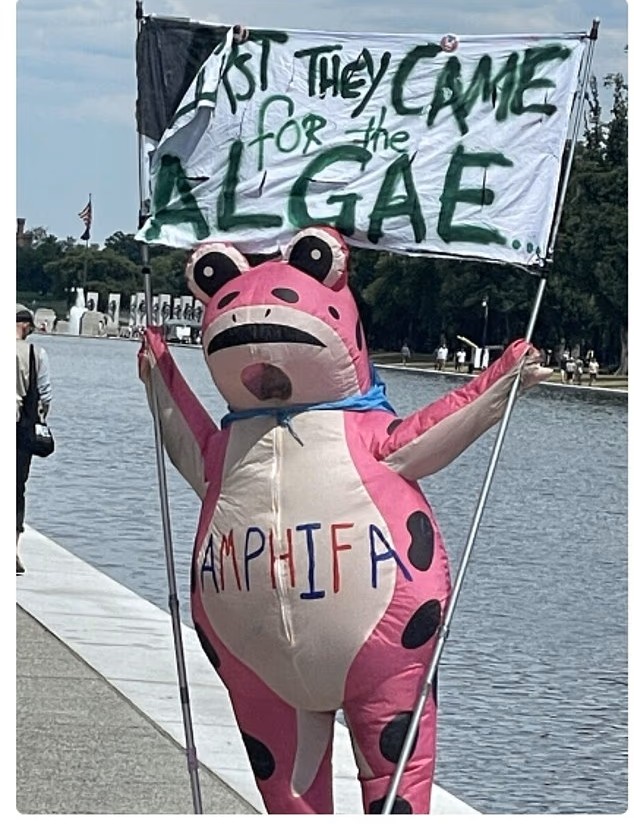
NOWADAYS MY PATRIOTISM gravitates toward something different, however. As I hop further into eldership I find myself wanting to channel the best of my parents, first and foremost by being a good husband to Jennifer, my co-author in life for four decades.
My mind was blown on June 19, 1995, when she gave birth in a little farmhouse in northeast Tennessee. If her labor had been a few hours shorter, we would have entered the world of parenthood on Father’s Day. Instead that baptism began on the date celebrated as Juneteenth, when Americans commemorate the most visceral turning point in our country’s journey of freedom.
My heart fills with remorse when I think of the parents and children who were separated from one another during the days of slavery – families treated as sub-human, members sold off as livestock. I think about the complicity of my kin and our privileged peers who said nothing in their day, indeed accepted that reality as part of America’s norm.
This year on Father’s Day, which fell on the summer solstice, I gave thanks for good men who step up for women and children and elders, fellow patriots who do not remain silent now as families and communities are ripped apart, even when brave souls who defend them are executed by masked agents. I stand with fathers and husbands and brothers and friends who affirm our solidarity with immigrant and trans people – Americans now scapegoated who deserve basic human respect, as do we all.
Staring down at us is a predatory power that pursues dominion at any cost. That power wears many colors, including the one worn by Goldwater and me for a while, plus my parents for most of their lives. Yet unlike many public figures who’ve sported red, mom and dad had little interest in politics.
In this respect they had more in common with a mythic figure named Burley Coulter, farmer and central character in a story written by Ken Kesey’s friend from Appalachia, Wendell Berry.
“It’s right outlandish what we’ve got started in this country,” said Burley, “big political vats and tubs on every roost.”
Those were some of Burley’s last words before he died. They communicate a kind of patriotism that’s further elucidated in Berry’s “Fidelity,” one of the best stories I’ve ever read.
Babbs and Kesey and Berry all hail from my parent’s generation. I suspect they could all relate to Burley’s use of the word “political,” and they probably had similar feelings about “politicians.” These words point to a personality type that values government control more than the practical work of community.
In my book, fidelity to what’s most important challenges loyalty to that political power. Mom and dad were patriots in that sense, not with writing but with their relationships. Their interactions defied those who co-opt words like “fidelity” and “family” and “marriage,” politicians who deploy them in campaign ads and couple them with policies of exclusion.
OUR CHILDREN AND THEIR PEERS may never call themselves patriots. Yet they carry a don’t-tread-on-me commitment to this land and her people, handed down by their forebearers. Jennifer and I pray they can pass along the celebration of freedom, long after we join our parents in the country of pure spirit.
May this be an endless summer of liberation, when we replace servitude with service, scapegoating with hospitality. May we the people declare independence for every individual, every expression of selfhood that helps make us whole.
And because my patron saints and I love Jesus, I ask for Christ’s blessing over these words.

A lovely expression of the true American experience. Thank you, patriot!
Fills my heart with joy that you read this Michael. The musical synchronicities in this piece really moved me as I was writing. So your feedback grounds my feeling of community.
Music is such a unifying force. At times it also demonstrates the challenges of diversity. For example, I don’t know how to listen to the kind of music I’ve often called avant garde jazz — what I refer to as “free jazz” in the essay.
While writing this, as I was trying my best to listen to Albert Ayler’s “Saints,” I flashed on a key section of Ken Kesey’s novel “Sometimes a Great Notion.” The brothers bond over music when they reunite, sharing songs they both loved. But then one brother pulls out some free jazz and it really sets the other one off.
The moment illustrates an epic divide between these main characters in Kesey’s novel. Often the egoic impulse in such moments is to square off in a duel of who’s cooler.
Part of my personal prayer is to pause in such moments, remind myself to be open to new tastes. Even if I never learn to enjoy a particular art-form, I want to appreciate how it adds to the broader work of creativity that might one day produce something that feeds my soul. Free jazz may never do that for me, at least not in a way that feels comfortable. But I can be grateful that it does that for other folks, thus benefiting the whole.
Amen, Watt, to your saying: “May we the people declare independence for every individual, every expression of selfhood that helps make us whole.” And may we do this every day in every way we can as people of this ole world of ours.